pasta

hot red epic

I started reading Rebecca May Johnson’s Small Fires: An Epic in the Kitchen while I was alone in the house for a few days, with only my own appetite and whims to cater to.

One night, I cooked the hot red epic as Johnson calls it (p.89) - the recipe she cooked a thousand times, the recipe whose origins she is determined to discern but which prove murky. The recipe that made her think about what it means to make a recipe over and over, to “put your own spin on it”, and how recipes are affected by their historical context, their ‘source text’, the material circumstances that produced them, their language, their authorship. How a recipe can be a “siren-text, an ‘I’ that also speaks as ‘we’ and ‘they’ and ‘you’.” (p.97).

I was surprised that the hot red epic was just a simple tomato pasta sauce. But, as with all simple things, deceptive.

I didn’t have enough olive oil. Once it was cooked, served and tasted, I found I needed some capers and a pinch of chilli flakes for it to go from “fine” to something more interesting. Was it my supermarket own brand tomatoes, that still said Italian on the label? Should I have gone for the posher ones? I wrote this isn’t something I could see getting obsessed with in my journal as the saucepan soaked.

But the next day, I recalled the thin slices of garlic, the tomatoes, the richness of the (barely two tablespoons, as that’s all I had left) olive oil and yes, now I could see why one would want to perfect it. The simple things often elude us.

Three nights later, I was alone for dinner again, and I saw the homegrown garlic bulbs I had dug out of the garden drying on the kitchen window sill. The jar of living basil next to them. Another can of plum tomatoes in the pantry. Suddenly, all I wanted was to cook the hot red epic again. It was a siren call.

This time, it was undoubtedly richer and more unctuous as I used the full six tablespoons of olive oil. Though it was now a little too on the oily side for me. And I still needed the punchy tang of capers.

This should be the end of it, I wrote.

But no.

I still have garlic, basil, tomatoes and I’m going to make it again, this funny thing that’s wormed its way into my brain somehow, that good cook should have decent tomato sauce in their repertoire. I will try again. I will challenge myself to eat it without capers.

Finally, I see why Johnson was so compelled to keep trying this recipe again and again, a thousand times, and then wondered about everything that lay underneath it. How it became a hot red epic.

Why do we cook? is the question Johnson seems to be asking throughout the book and I liked how she tried to answer it.

I can feel myself getting slightly obsessed

Please note: this blog post has affiliate links with retailers such as Booktopia which means I may receive a commission for a sale that I refer, at no extra cost to you.

homemade fresh pasta (vegan + easy!)

One of the things I really resisted about a vegan diet was giving up eggs - not only are they delicious in their own right but they are key ingredients in so many other foods I enjoy, fresh pasta being one of them.

I did not think it was possible to make a decent fresh pasta dough without eggs…..but then I came up with this recipe and was blown away!

It’s also a great no-waste recipe because it uses aquafaba - the liquid found in canned chickpeas. It’s slightly gelatinous, like eggs, and protein-rich so works as a great binding agent. We honestly couldn’t tell the difference. The dough was silky smooth, went through the pasta machine like a dream, and was absolutely delicious to eat.

You don’t have to be vegan to enjoy this recipe - if you feel like fresh pasta but have no eggs in the house, you’re in luck! If you’re curious, I highly encourage you to give it a try.

Vegan pasta dough

Enough for 4-6 servings

400g pasta tipo 00 flour
200ml aquafaba (or tepid water, or a mixture of both - see instructions)
Large pinch turmeric powder (for colour)

Weigh out the flour and add to the bowl of a food processor, together with the turmeric.

Open a can of chickpeas* and drain the liquid (the aquafaba) into a jug or place a jug/small bowl on digital scales and pour the aquafaba directly into it to measure it that way. You’ll need 200ml of liquid in total. I found that a typical 400g can of chickpeas gave me about 175ml of aquafaba, so I made up the 200ml with some tepid water.

Add the liquid to the flour in the bowl of the food processor.

Turn the food processor on and blend it all together for a minute or so, until a dough begins to form. You may need to pause the processor, scrape down any flour or stray dough from the sides, and whiz again until it all comes together.

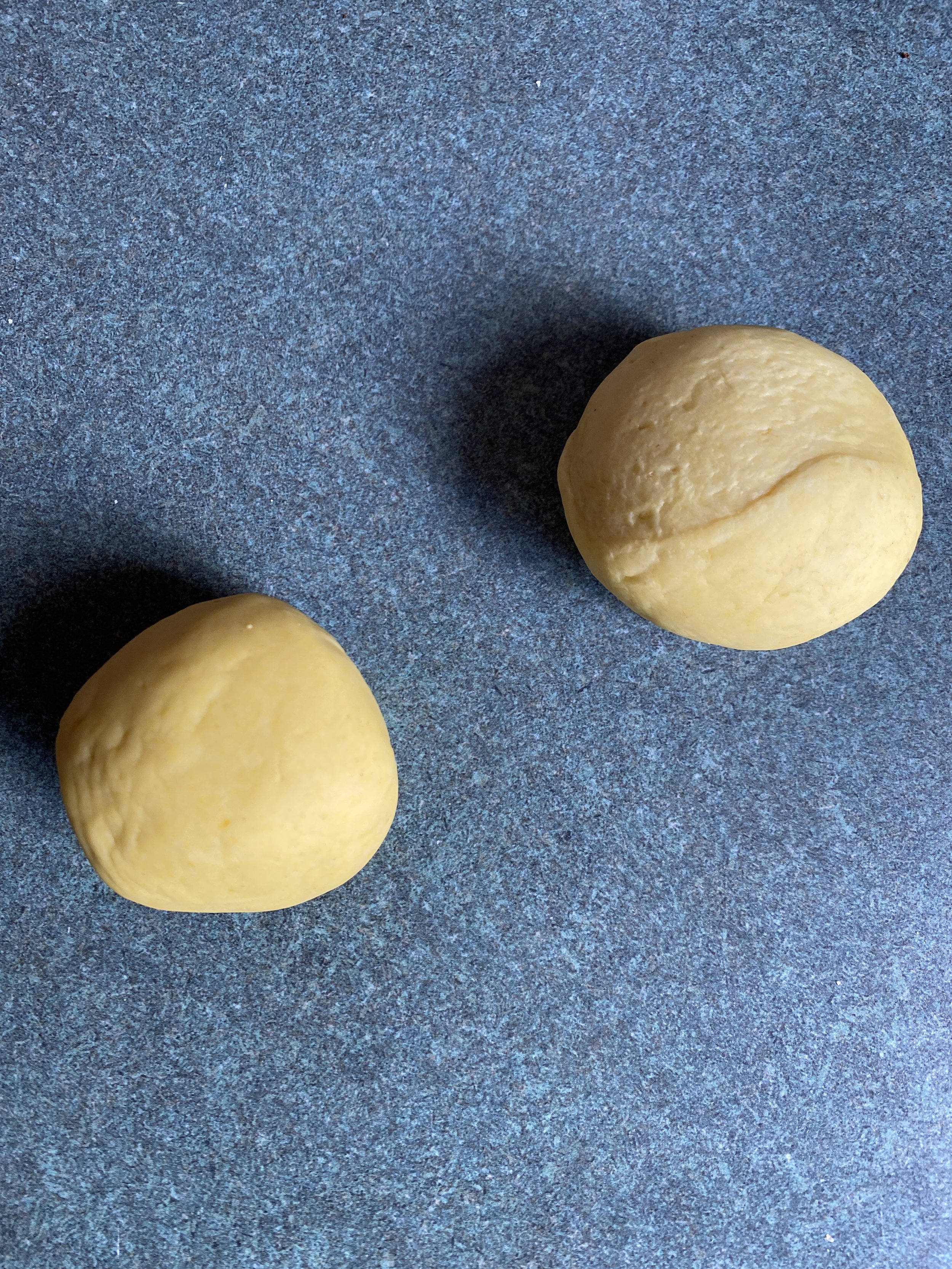
Turn the dough out on to a lightly oiled or floured surface and knead together until it’s one large smooth ball. It won’t take very long. In fact, you’ll probably be quite surprised at how fast it comes together!

The dough then needs some time to rest and chill - don’t we all. I don’t buy clingfilm, but I do have a stash of clean plastic bags that bread, etc has come in - I put the dough in one of those, wrap it up and put in the fridge for 30 minutes.

Note: you can, of course, bring the dough together by hand if you don’t have a food processor, it will just require a bit more effort and elbow grease! Just make a well in the middle of the flour, put the liquid in the centre and then mix together with your hands and knead as above.

Once the dough has had its chilling time, you’re ready to roll!

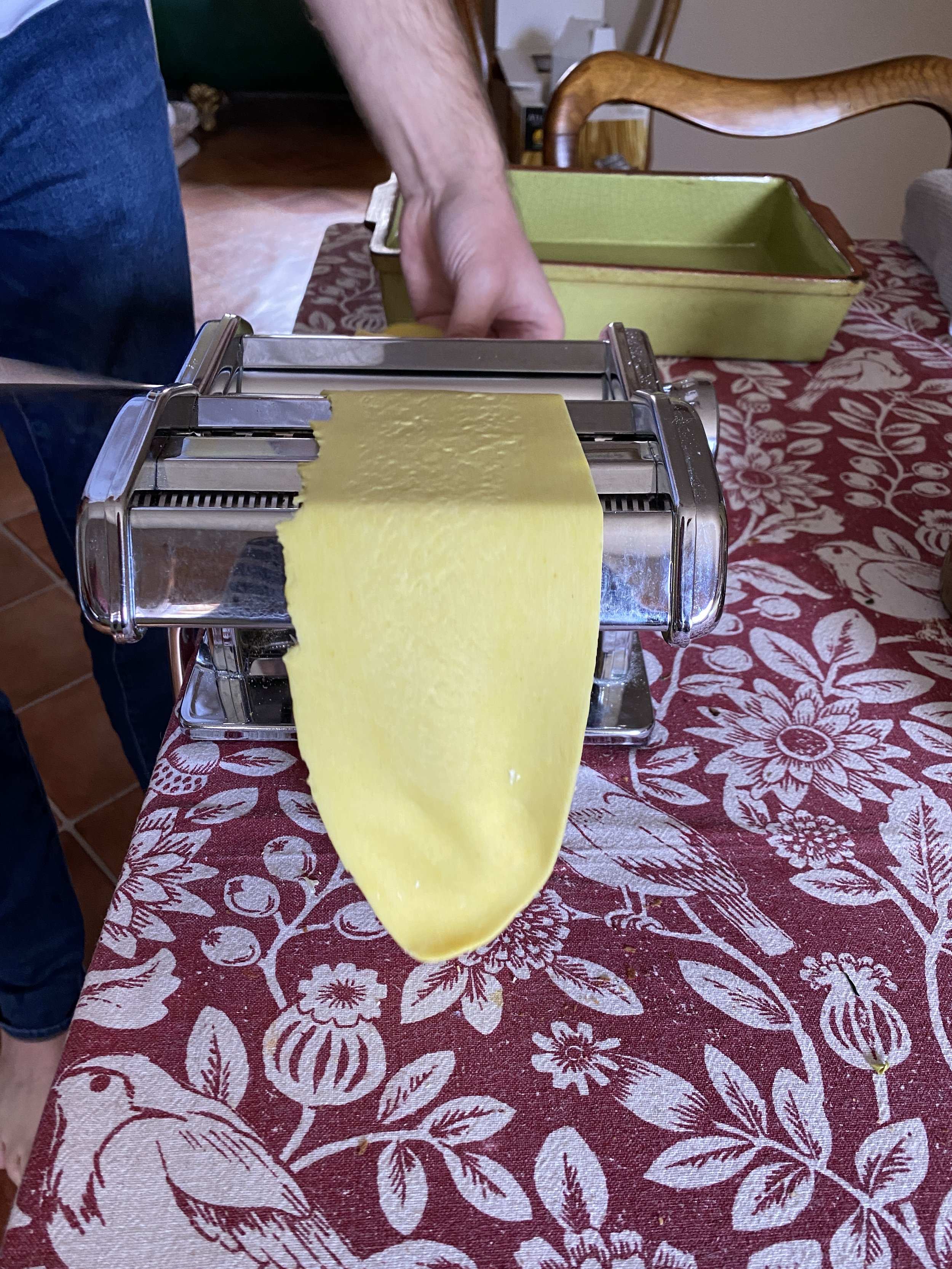
Cut the dough into six equal pieces - I cut it in half, and then each half into thirds. Feed each piece of dough through your pasta machine according to the instructions, and until it’s at your desired thinness.

Either use the sheets of pasta to make lasagna, cannelloni, ravioli or tortellini, or cut the sheets into your desired pasta shape.

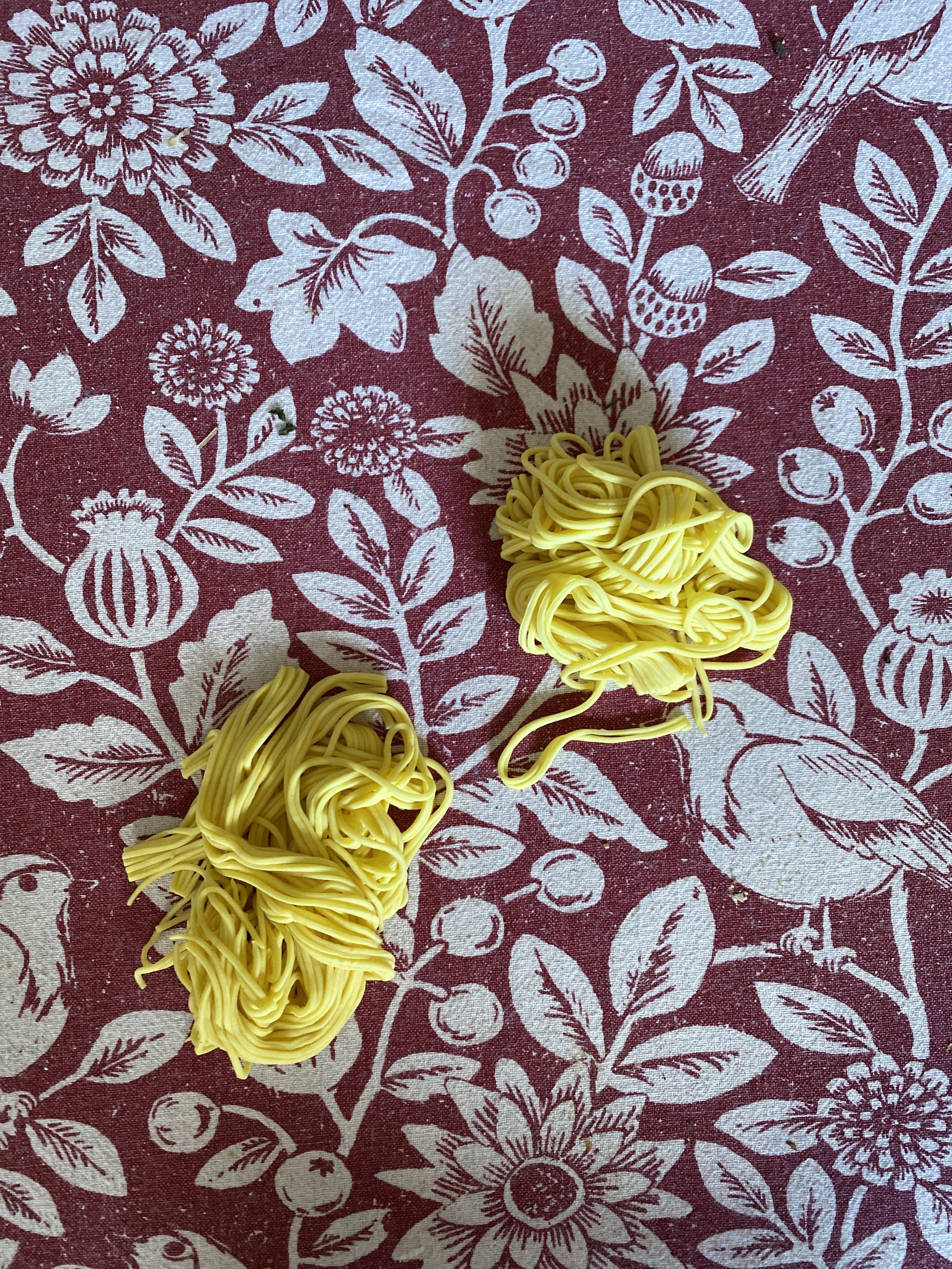
We used four pieces of dough to make pasta sheets that we turned into a lasagna, and the other two pieces we made into thin noodles which we enjoyed with dumplings and green vegetables in a soup.

This is a seriously incredible pasta dough, and I can’t wait to make it again. And seeing that it’s so easy, I think “again” might be “tonight”!

*Obviously reserve the chickpeas for another dish! Maybe this one? Or this one?

zucchini pasta

This isn’t the prettiest dish you’ll ever cook, but it will certainly one of the tastiest. It’s a great recipe to have up your sleeve this time of year when zucchini (or courgettes, I use both names interchangeably in my house!) are in season and plentiful. If you grow your own, no doubt you have them coming out of your ears and are trying to think of ways to eat them. This mixture would also be a lovely dip, once cooled, or enjoyed with chunky pieces of grilled bread. Goodness, I feel hungry just writing these words!

You need to use quite a bit of oil in this recipe but that’s the secret to the creaminess of the sauce, and the reason the zucchini go so beautifully soft, as they are effectively braised with the onions and garlic. It’s not greasy at all, I promise!

Zucchini pasta

Serves 4

Good quality extra-virgin olive oil
2 onions, finely chopped
3-5 zucchini (depending how big they are), chopped into cubes
1 garlic clove, crushed
Chilli flakes, a pinch or two
Salt and pepper
2 tablespoons vegan sour cream (or ricotta)
Fresh basil, finely chopped or torn, as much as you like
500g dried pasta (penne or rigatoni are my preferred shape for this dish)

In a saute pan, a wide and shallow one you’d use to cook risotto or this pasta, pour in enough olive oil to cover the base, enough for the vegetables to paddle in. Place over a low-medium heat. Add your onions and a pinch of salt, stir, then leave to stew slowly. I probably should have warned you, this is the kind of dish you make on a balmy summer evening when you’ve got music playing and some other nice thing to occupy you - a book, a lover, anything where you won’t feel too impatient waiting around for something to cook.

I find the onions take about 15 minutes, you don’t want them to brown, just stew and soften. Add the zucchini, salt, garlic, chilli, black pepper, give it a good stir, then replace your lid and leave to simmer slowly over a low-medium heat until the zucchini are juicy and, when you stir them, starting to fall apart. It takes anywhere for 20 minutes to a full half hour.

Now cook your pasta, which will give the zucchini even more time to braise and soften. Drain it once it’s cooked to your liking, reserving a cup of the cooking water in case you need it.

Add the vegan sour cream and basil to the zucchini mixture, stirring well, then the pasta, stirring well to coat it thoroughly in the sauce. Add some of the pasta water if it seems dry. I like to add a final grinding of black pepper. You could add some Parmesan too, if you like.

Serve and feel inordinately blessed in your garden’s summer zucchini glut this year.

tomato, caper and mint spaghetti

tomato-caper-mint-pasta-philippa-moore

Tom and I were watching a Rick Stein show where he was in Sicily. He didn’t cook this dish but mentioned a pasta he’d once enjoyed in Palermo, simply made with tomatoes, capers and mint. I’ve never managed to find a recipe for it anywhere, but it sounded so delicious I simply had to give it a try. And it was as amazing as it sounded.

That was a few years ago now and this is still one of our most favourite pasta dishes. Sometimes I’ll just say “Rick’s pasta?” to Tom when it’s getting close to dinner time, and his eyes light up!

It’s best made with long pasta - in the picture I think I’ve used fresh tagliatelle, but I’m particularly partial to linguine. You can add chilli - I sometimes do - but this pasta doesn’t even need Parmesan, truth be told. The capers are punchy and acidic, the mint is fresh and savoury, the tomatoes are sweet. It’s just glorious.

I hope you like it as much as we do!

Tomato, caper and mint spaghetti

Enough for 2, with room for dessert

250 g spaghetti (or any other long pasta)
Good quality extra virgin olive oil
2 garlic cloves, peeled but left whole
Roughly 250 g cherry tomatoes, or larger truss tomatoes, halved or quartered depending on size (use as much as you like, this is just a guide)
Roughly 5 tablespoons capers (from a jar) (and again, use as much as you like - we love capers so add about half the jar!)
1 small bunch fresh mint leaves, finely chopped
Salt and pepper

Put a stockpot of salted water on to boil and cook the pasta according to packet instructions or desired al dente-ness.

Get a large saute pan - I use my Le Creuset shallow casserole dish - and cover the base in olive oil, adding enough for the tomatoes to paddle in. Add the garlic cloves.

Place the pan on a medium heat and allow to heat slowly. Once you hear the garlic sizzling, carefully add the cherry tomatoes (I leave them whole, but you could halve them). Turn the heat down, put the lid on and allow the tomatoes to cook gently in the oil for about 10 minutes, roughly the same time it will take the pasta to cook. Check on them occasionally. You don’t want them to be mushy and breaking down too much, just soft.

You can remove the garlic at this stage if you prefer, but I usually leave it in. Add the capers to the tomatoes, and a bit of salt and pepper. You could also add a splash of white wine if you have any handy.

Once your pasta is ready, using tongs, carefully lift the cooked pasta out of the stockpot and into the tomato and caper pan. The water clinging to the pasta will help make a lovely sauce.

Once you have all your pasta in the tomato pan, turn up the heat slightly, add the chopped mint, and toss everything through with the tongs so that the pasta is completely coated in the tomatoes, capers, mint and oil. Everything should be beautifully combined. It shouldn’t be dry but if it is, add another splash of the pasta cooking water.

Season with salt and pepper to your taste.

Heap into waiting bowls and eat immediately - as if you’d want to do anything else!

I have made this with basil and parsley before when I only had a sad lone sprig of mint from my garden and it’s still delicious - but do make this with just mint at least once as it’s sublime. I just adore mint, it’s one of my favourite herbs and gives such a beautiful flavour to everything from salads and grilled vegetables to slices of grilled halloumi.