don't forget about poetry

“I wish to say that we will not be saved by poetry. But poetry is the type of creation in which we may live and which will save us.”

-  Muriel Rukeyser, The Life of Poetry

Typing before coffee a few days ago, my sleepy fingers felt this paper, caught under a wireless keyboard. It stopped me in my tracks.

I used to write a lot of poetry. At uni, I fillednotebook after notebook with poems, even sometimes in the margins of lecture notes, and most days after classes I'd scamper back to my car and scribble one down before driving home. In those days I was constantly flooded with impressions.

Everything seemed to catch my attention. The gang of students playing frisbee on the oval, the fraying protest posters clinging to the building walls, the empty stained coffee glasses outside the student cafe, a classmate's fluffy purple cardigan that looked like she'd plucked it from a cat's basket. All of this I captured, and reading them is like having a switch back to that time in my life, before things got too serious. I was not your typical uni student, and while I sometimes wish my uni days had also been filled with parties, backpacking and maybe even some cheap vodka here and there, I cannot regret that they were filled with poetry. 

In fact, the first piece of writing I ever had published was a poem. It was a few months after I moved to London, in a small literary journal, and I had written the poem itself in Hyde Park after a tumultuous few weeks in my new home, unsure if I should get on the next plane back to Australia, utterly beaten down by life, love and the city itself. That poem was my heart in 40-odd lines and having it published was one of the happiest experiences of my life. 

I haven't written a lot of poetry since, admittedly, but last year, stuck and frustrated and feeling very lost, I started writing poems again. Little snapshots of life that perhaps one day, decades from now, will transport me back. Lately it's all been about other writing but this little note from the universe has reminded me - don't forget about poetry. It is the seed, the base note, the tuning fork. It's where I came from.
how I started running again

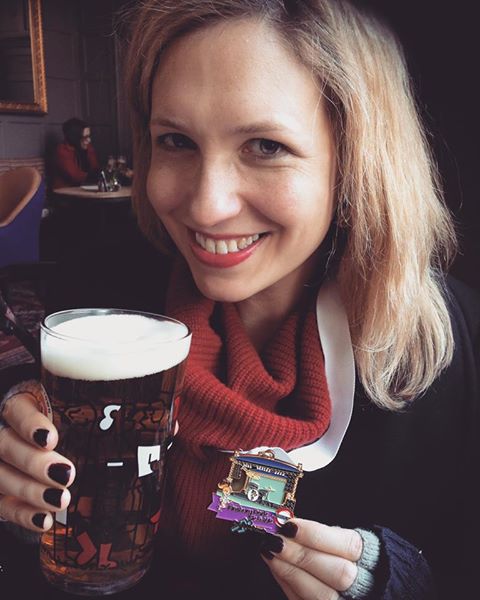
As most of you would know, I run for beer! :) 

As most of you would know, I run for beer! :) 

On Sunday I ran the RunThrough.co.uk Finsbury Park 10k race. It was -4 degrees, I ran with about four layers on, wasn't able to keep my no-toilet-break record, and stopped to walk twice, but I finished! And that was all I wanted.

It’s been a strange couple of years for me. Full of incredible highs, but equally full of lows. Stress, anxiety, grief, burnout…. they certainly make life less fun. They rob you of the ability to see the bigger picture. My wellbeing/self-care is always the first to suffer when I feel like that. But the desire to run, to keep up the kind of training I'd been doing, had completely left me, After years of running a half marathon every weekend, I was exhausted and needed a break.

That's not to say I've not gone running since then - but it's been jogs round the block when I could be bothered, really. But until Sunday I hadn't run a proper race since 2013. Sunday was my first 10k in all that time.

I started running again last year. Once a week, with a group at work. I was in a very apathetic place, very much with a can't-be-fucked-what's-the-point mindset, but figured once a week was better than nothing. Most weeks I managed between 4 and 5k on those runs. It wasn’t a marathon, but, as I say, better than nothing.

I spent so much of last year feeling utterly drained, unable to move forward. Spending such a long time in the company of your past takes a real toll on your sense of self, I discovered. I spent a lot of last year wondering who the hell I was any more. Things that used to be so easy for me were suddenly REALLY BIG THINGS. Like going to parties where I didn’t know anyone. Like writing. Like running. Those things used to excite me, give me energy. But now I NEEDED energy to do them. It was exhausting, frustrating and left me in a bit of a heap.

2017 is only 26 days old but I’ve already bought new running shoes, done two park runs, my standard run with my work running group is now 6k and now I’ve done my first 10k race in nearly 4 years.

Six years ago, almost to the day, I had just started training for the London marathon. I was doing 10ks before breakfast. So you might think it’s a bit disheartening to only be doing 5ks and 10ks considering how fit I used to be. But it’s really not. I feel so happy, so grateful, to be running again I don't care about the distances. I just want to run. It's part of who I am. Something I didn't realise until I wasn't doing it any more.

My life has been a series of ebbs and flows, ups and downs. You can’t have one without the other. The story I shared in The Latte Years keeps going. I’m not the same person who went through all those highs and lows in the book – I’m not even the same person who wrote it, a mere two years ago. I’m a work in progress, always. I’m (still) learning that when life gets a bit much, as it does for all of us, not to let go of the things that take a bit more effort than sitting on the couch with Netflix and crisps, because it's those things that truly light me up from the inside.

Returning to running - not just a jog here and there when I could be bothered - has been marvellous. Not just the joy of being physically active and pushing my body beyond its comfort zone, but I’m remembering how to be my own cheerleader. I’m remembering how important it is just to show up and give it a go - you don't have to be the best, just do YOUR best. How important it is to just run your own race and not worry about what other people are doing, how much further ahead they may or may not be. I am overwhelmed with gratitude for my good health, for the ability to run at all. I have been reminded that negative thinking, in running and in life, is a luxury I simply cannot afford.

Most of all, thanks to running, I feel more like myself than I have felt in a very long time.

PS: I totally signed up for that 10k because of the medal. Isn't it beautiful?

philippamoorerunthroughuk10kfinsburyparkmedal

tell the truth about yourself

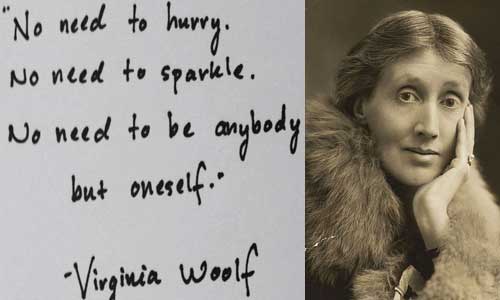
“If you do not tell the truth about yourself you cannot tell it about other people.”

So said Virginia Woolf, who was born 135 years ago today.

It got me thinking about my own work, the evolution of what became The Latte Years. I wanted it to be a novel, to take everything that had happened and make it not about me, have it be someone else's story. Also, I like making stuff up. In the three years where the only version of The Latte Years that existed was a novel (and lived on my laptop),  I had so much fun embellishing the facts. Things became far more dramatic, but also neater, than they had been in real time. 

Now, not only do I know in my bones (however reluctantly) that everything to do with The Latte Years - both the events described within it and everything that's happened since - had to happen the way it did, but Virginia Woolf's words above feel more relevant to me now than ever before. It's like a favourite teacher giving me a pat on the shoulder, as if to say, "you had to do this first. Now you can do the other thing."

The writer I used to be, before The Latte Years, used fiction as a place to hide rather than a place to let her imagination run wild. Looking back, memoir was the only way out, the only way that story could be told. Memoir was my rite of passage. I emerged from that year - 2015 - a changed person, and a completely different writer. To become the writer I am now, The Latte Years had to be written. As it is. The truth of my life, my story, my experiences, as I lived them and remembered them, nearly a decade on, alone in a study on the other side of the world from where most of it took place.

So now that I've told the truth about myself - as confronting as that was -  I'll be able to write other true things. Hemingway said, in one of my favourite books A Moveable Feast, "All you have to do is write one true sentence. Write the truest sentence that you know."

That's advice I intend to follow.


i must begin again: a writing retreat in norwich

Serving suggestion for this post: sitting comfortably either with a cup of tea you've just made or on a train that isn't going anywhere.

Years ago, when I was writing the earliest drafts of what eventually became The Latte Years, I would often house-sit for friends for a few days when the opportunity arose, relishing a house as empty as my schedule, where I could completely dedicate myself to writing, away from the daily grind of life. Of course, when you have a deadline and only three months to deliver 100,000 words around a full time job, you suck it up and get it done. But the idea of time – a few days completely free of your usual routine and obligations, stretching out in front of you – to do that work is a really precious and luxurious thing.

I have done wonderful guided writing retreats before, and if money were no object I’d do them far more often. There’s a lot to be said for the motivation of a group setting and an experienced, inspiring teacher to spur you on. But the empty home of a kind friend or relative for a few days does just as well, and is utter bliss for the creative person.

A bit over a month ago, I went to Norwich to a sweet little cottage to house-sit, keep my aunt’s plants watered, to write and recalibrate.

I have a few projects on the go at the moment – the biggest one being what I hope will be Book 2 – but they had all been lacking much-needed momentum. About six months ago, in the midst of the bleak end of winter, I decided I would go away on my own a few days at some point over the summer, to see if I could find that missing ingredient. With all the highs and lows 2016 had delivered so far, I needed to reconnect with myself and my creative practice, without the distractions of daily life providing endless justifications for putting things off, for not making time.

Unfortunately that week at the end of July I had come down with a nasty throat infection, so on the train journey up from London I mostly sipped hot tea, read Oh Comely magazine and eavesdropped on interesting conversations happening all around me. All things I enjoy doing, sore throat or not! But I was unsure as to whether the weekend would be as productive as I’d hoped, given how poorly I was feeling. Many of the businessmen around me were drinking whisky. I considered joining them, I was sure it would help my throat.

Travelling essentials.

Travelling essentials.

I arrived safely, fell on the empty house with gratitude and relief, and went to bed early. I was up with the sun the next day – a rhythm I settled into for the rest of the retreat. Each day began with black coffee made in the moka pot on the stove, sipped in the garden, where toasty warm sunshine beat down on my shoulders, bees and butterflies floated among the flowers and the coffee slowly warmed my sore throat, dry and raw from coughing.

I walked into Norwich city centre nearly every day, mostly to treat myself to a second coffee at Gosling and Guzman. “The secret to a happy life is continuous small treats,” said Iris Murdoch in her novel The Sea, The Sea, which I happened to be reading, so I took it as a sign to get a cinnamon bun too.

Lovely coffee and buns at Gosling and Guzman. And their takeaway cups are so pretty!

Lovely coffee and buns at Gosling and Guzman. And their takeaway cups are so pretty!

I was alone for the whole time, but not lonely. I slipped easily into solitude, wearing it like a comfy familiar sweater. No television, no internet, no email, no social media. Text messages were the only contact I allowed myself with the outside world. It was amazing to realise how disciplined I could be and simply not look at social media – I disabled all notifications so it was simply a matter of not allowing my finger to touch the icon, though it gravitated automatically whenever my phone was in my hand, much to my curiosity. It’s definitely far more of a habit and a distraction than I realised.

Otherwise, I gave everything my full attention – not just my writing, but books I read, music that kept me company, food I cooked.  Choosing to focus, to tune out the usual constant distractions, it was incredible how much more I noticed and took in, savouring everything from the peppery depths of my watercress soup and subtle key changes in the music I was playing, to the smell of the air, the way light changed and the burn of hot tea in my sore throat.

Watercress soup - probably *the* best thing you can eat when trying to recalibrate, it completely detoxifies the body! And it's so yummy. I made Sarah Wilson's recipe in I Quit Sugar For Life.

Watercress soup - probably *the* best thing you can eat when trying to recalibrate, it completely detoxifies the body! And it's so yummy. I made Sarah Wilson's recipe in I Quit Sugar For Life.

I did yoga daily, something I haven’t done for a few years. Pigeon pose was incredibly comforting. I spent an entire Ludovico Einaudi song in uttanasana. I did my favourite episodes of Lacey Haynes’ Home Yoga Retreat many times.

I sat with my thoughts a lot, my journal open and a pen beside me, to scribble down anything worth remembering.

Sometimes I just sat and watched the light change. The light inside the house was very soft and as it hit the table and my piles of books, it looked milky, like when paint brushes are dipped into a jar of water. My iPhone camera didn't quite capture it so I just watched and took a picture with my mind instead.

I wrote a lot. Not the sort of things I thought I would write, interestingly. As the second day dawned, it became clear to me that this retreat was less about coming away with something to show for myself (which, if you've been reading me for a while, you know I enjoy) and more about getting my groove back.

Snapped while walking the quiet streets of Norwich city centre, sipping coffee. It seemed apt!

Snapped while walking the quiet streets of Norwich city centre, sipping coffee. It seemed apt!

Why did I lose my groove though? I wondered in my more melancholy moments. I didn’t think I’d feel like this. Why do I feel so empty, when my dream has come true? I wrote. Why do I feel so exhausted and, if I’m honest, sad? How did I go from so pumped, disciplined and motivated to can’t-be-fucked and what’s-the-point?

And then I re-read Dani Shapiro’s masterpiece, which I highly recommend to any writer, Still Writing. I found it such a comfort last year, where I mostly read the “Endings” section. This time, the “Beginnings” section was far more resonant.  Reading this paragraph was like a warm reassuring hug:

When I’m between books, I feel as if I will never have another story to tell. The last book has wiped me out, has taken everything from me, everything I understand and feel and know and remember, and…that’s it. There’s nothing left. A low level depression sets in. The world hides its gifts from me. It has taken me years to recognise that this feeling, the one of the well being empty, is as it should be. It means I’ve spent everything. And so I must begin again.

If you have done your job…you’ve thrown your whole heart into this. And now your job is done. And you are bereft.

I wanted to cry as I read this. I had spent months thinking there was something wrong with me. My whole body flooded with relief that another writer, let alone one I deeply admire, felt this way too. 

I gave The Latte Years everything I had. So indeed, that has been the feeling, even though I have so many other ideas and stories I want to explore, over the last six months or so - that I had nothing left, both to say nor the capacity to say it. The Latte Years had been a part of my life for a long time – scratch that, it was my life, literally! - that being without it has been very strange. It's only been recently, staring down the barrel of October, that the tunnel has had light in it again.

The first draft of what became the book that was published in January this year was started in 2010. It wasn’t necessarily the story I wanted to tell, but the one I had to. It was bossy and barged to the front of the queue. Me first, it demanded. It was a story that had been hanging around ever since the events of it had taken place, a story that had me by the throat and wouldn’t let go until I told it. I knew attempting to write anything else in the meantime would be fruitless – and indeed, it was. And now it is done. 

So what ended up happening on this retreat was nothing earth-shattering, just a lot of journaling and several short pieces of fiction. Because after years and years of my writing being about this one thing, I am finding my feet again. It’s strange, like what I imagine training for another marathon might be like. I’m back at the beginning. But this time I don’t have the energy of the first-timer, when you have no idea what you’re in for, and everything’s exciting, and it’s purely the thrill of the unknown and whether you'll actually pull it off spurring you on. Once you know, it’s definitely harder to lace your shoes up.

Writing ingredients.

Writing ingredients.

And something I have to remember is that while, yes, I wrote the manuscript for The Latte Years in three months, I had actually been trying to write that story for nearly five years prior to that. So, in theory, I’m way ahead of schedule for Book 2 and I need to stop beating myself up. Now is the time for thinking, gathering, marinating and, frankly, savouring. I worked so hard. It's OK to enjoy this and take a while before I dive in again. It makes sense to me to cultivate a strong practice, a mixture of discipline and play, so that I can get the juices flowing.

Retreats tend to spark the question "how can I keep this amazing, peaceful, zen feeling going in my life once I go home?" and I was no exception! I want balance and energy in my life, but I get very overwhelmed at the idea of trying to fit in everything I want to do with my time. The answer came very clearly towards the end of my time in Norwich and it felt like it had been staring me in the face all along. I am a fairly motivated and disciplined person but the secret to me achieving anything in life is to have projects, goals and deadlines. Without those things, I flounder. I always have.

Me, doing my best non-floundering face.

Me, doing my best non-floundering face.

But the truth is, I’ve needed to take the pressure off myself this year and have a few less deadlines, goals and to-do lists. The only thing that has stopped me from hiding under the duvet each day has been going gently. Withdrawing quietly from anything non-essential that adds nothing to my life. Writing mostly for myself, filling journal after journal, knowing it will never be read by anyone else and revelling in the thrill of that. Trying not to beat myself up about not doing everything I feel I ‘should’ be doing. Time out from life showed me that I can’t force inspiration. I can’t force a story out of me, it will only happen naturally. And perhaps it has more of a chance of happening naturally if I give myself what I need. Like, nourishing and simple meals. Creative play. Daily yoga. Time out from being ‘on’. Daily journaling of my thoughts. Meditation, sitting, supporting my throat chakra (which needed a lot of help, it was no accident I had a sore throat. More on that in the next post!). Self care. The luxury of doing nothing and not feeling guilty about it.

There was a part of me that thought I’d come away from my days in Norwich with the start of the next book, and that didn’t end up happening. But what did happen was I locked the house on the last morning, walked to the station and sat calmly and happily with a coffee and magazine (no phone!) on the train back to London, and felt flooded with a renewed sense of purpose. I was returning to my life with a bit of clarity, a clearer vision and a new pleasure in my craft; a re-dedication to my practice; and a better awareness of what I need to feel creative and balanced, and to make sure I get those things, because that is the only way I will do my work.

In that respect, the retreat was a complete success.

Reading on the way back to London.....

Reading on the way back to London.....

Next post: how I healed my throat chakra in Norwich (now there's an article for the East Anglian Daily Times!)

Have you ever gone away on your own to retreat, recalibrate, start a new project or get your groove back? What did you discover?

renewal

A chai to farewell my old, expired passport...

A chai to farewell my old, expired passport...

Ask an expat to name their most valuable possession and I’m pretty sure the answer would be their passport. Not only is it usually proof you have the right to be living and working wherever you are, but it’s your ticket to freedom and your get-of-jail card. It can get you anywhere, especially home.

I recently renewed my passport and I was sad to say farewell to the dog-eared one that had expired. That particular passport was issued in 2006 and to say it symbolised freedom to me would be something of an understatement. It wasn’t strictly speaking my very first passport –  that one was issued in my married name at the time, and I had taken only one trip with it, to New Zealand so I hadn’t even got it stamped – but it was the first passport that I ever really put to good use, and the one that I knew would get me where I needed to be, in every sense of the word. 

I reverted back to my maiden name pretty much the week my first marriage was over. It was possibly a knee-jerk reaction but I was so wounded, ashamed and embarrassed about everything that had happened with my first husband. I felt sick every time I saw his name. So I set about obliterating it from anything associated with me, which was a fairly horrendous process. I had my used-once married name passport cancelled and I remember taking all the documents to the post office to apply for a new one. I couldn’t just change the surname and get a replacement free of charge – I could only do that if I had divorce papers and that couldn't happen for another year minimum, as I had only just moved out. None of it was as simple as I thought. I was still legally bound, regardless of the fact I'd put the rings in a drawer and changed my name back. 

That was the time when the enormity of it all started to hit me. I had made a terrible mistake that was going to follow me around for the rest of my life. I had only just turned 25 and was overwhelmed by the mess I’d made of everything. I thought, somehow, getting a passport in my own name might make me feel better, that it might give me the push to actually start seeing the world as I'd longed to do, because now there was no one to stop me. 

So I tried to explain to the woman at the passport interview why I was there and what I wanted to do but my throat kept closing over with tears I was determined not to cry (I hadn’t yet realised that crying in public is pretty much par for the course with a marriage breakdown). The woman was looking at my birth certificate as I spoke (or tried to) and then she reached across the counter and squeezed my hand.

“You’ll always be Philippa Moore,” she said fiercely. “That’s who you were born. That’s who you’ll always be. He can’t take that away from you.” Her tone was heavy with the wisdom of someone who had been there.

My new passport was issued within a few weeks and my first trip with it was also to New Zealand, so in many ways it felt like a reset, like the first one had never happened. My first ever stamp in it was six months later, in April 2007, when I boarded my plane to San Francisco at Sydney airport. “Departed Australia” declared the stamp, and a few pages down was a UK Ancestry visa safely glued in. My adventure had started.

2016 seemed like an age away back then. But all of a sudden, it was here and my beloved passport was useless with less than six months validity on it, so it needed renewing. And not a moment too soon, as it was getting tricky for an immigration officer to find space to stamp it every time I went somewhere, it was so chock full of evidence that I had revelled in my freedom.

Flicking through the pages is like going to an exhibition of the last 10 years of my life. A UK visa long since expired and replaced with an indefinite leave to remain card; a visa to enter India in 2011 (I wish I’d made another trip while the visa was still valid!); stamps from every country I’ve ever visited, every one of them evoking a hundred memories. The photo at the front was a young woman staring blankly into what felt like, at that moment, a very uncertain future. The only thing she was sure of was that she had to see the world. As she began to make those plans, she realised the future was actually wide open and she could decide what happened next.

I will keep that passport forever. I might even frame it. It's an old friend.

My new one feels different - not just because the design and e-features have changed in the last decade, but it really feels like a new era. The pages are blank. Who knows what they will hold by the time the next renewal comes around....the photo of course is still hideous, but I was pleased that I didn’t look too different after 10 years! 

Waiting at Gatwick Airport for our flight to Cyprus two weeks ago...with the new passport!

Waiting at Gatwick Airport for our flight to Cyprus two weeks ago...with the new passport!

It feels fitting that my first real passport expired the same year my first book, which chronicles the adventures I had with it, is now out in the world. In so many ways I’m still that 25-year-old staring into the camera, trying to keep her head straight. Life is unpredictable, that’s for sure. But one thing I know, I’ll always want it to feel like an adventure.  

I've already got my first stamps in the new passport. The new era has started!