bread

the last two weeks

The usual excuses, my friends! I seem to have blinked and it’s another Friday. And how is it October tomorrow?! I promise I will get back to more regular posting soon. I have two weeks to catch you up on, though there hasn’t been anything too exciting to report. Except…

Favourite experience of the last two weeks

The birth of and meeting my new nephew. Holding him, stroking his silky cheeks and downy head, marvelling at his tiny ears and fingers with those miraculous little specks of nail on them, watching his eyes flutter open and look at me. He is beautiful. I can’t wait to get to know him.

Reading

While it feels like I’ve been working non-stop (and I have!), I’ve also been reading a lot. My brain feels like it’s had some hearty meals.

I read Blueberries by Ellena Savage which I thought was excellent - so inventive, clever and affecting. I watched quite a bit of Parks and Recreation while I was reading it so somehow found myself reading this book in the voice of April Ludgate as it’s quite dry and cynical in its humour (I thought), which added to my enjoyment (though some parts of it, the first essay in particular, are not funny at all). At the same time, it’s so poetic and fragmented, and really pushes your perceptions on what you expect to find when you pick up a memoir. In fact, I started the book halfway through, because I opened the book at random and was so intrigued by what I saw, I read from there, and then went back to the beginning…which added to the slight disorientation, never quite knowing what to expect. What does it mean to write about yourself, your body, your traumas, the way you live in the world? These are questions which, on reflection, I’d like to have grappled with in a more intellectual way in my past work. The toothpaste is already out of the tube in that regard but these questions still really interest me and I love seeing how other writers play around with them. Savage is really clever and creative in how she straddles self-enquiry and enquiry about the world at large. I really loved it!

I also read Nightbitch by Rachel Yoder which I devoured in mere days. I was intrigued by a mention of it in one of Jen Campell’s videos and thought I’d check it out at the library. All I have to say is WOW. It’s a very clever and utterly surreal novel that has an element of fairytale about it (which are, after all, incredibly dark stories). It’s about an exhausted, rage-filled mother of a young child who starts turning into a dog. As in…she is literally turning into a dog. She starts growing fur, prowling the neighbourhood at night, killing small prey, and eating a lot of meat. Even her child gets in on the act! It was quite a trip to read this on Day 1 and 2 of my cycle, I have to say! Of course, it is an extended metaphor and a very, very clever one. I think every woman, mother or not, can relate to that rage that is so deep it’s in your bones at the sacrifices and behaviours that are expected of us, with or without children. Fabulous. Highly recommended!

I also started reading A.S Byatt’s latest short story collection Medusa’s Ankles which I’ve been dipping in and out of - again, very surreal fiction set in a recognisable world.

The Guardian: I enjoyed this piece on Lena Dunham, this one on writing the story of Australian history, this one on how more doctors are writing about the harsh reality of practicing medicine in this country but I particularly loved this one by writer Sarah Moss, who wrote about buying herself a small gift when at a low personal ebb:

Maybe we’re allowed to find small joys, in proportion to our situations, on a burning planet with the ancestors howling in our ears.

I was gutted to read of the death of Hilary Mantel, whose command of and passion for the craft of historical writing has had such an impact on my own work these past few years. I highly recommend all of her Reith Lectures which make for fascinating and compelling listening, in one of which she says:

You don’t become a novelist to become a spinner of entertaining lies: you become a novelist so you can tell the truth.

What an incredible human and writer she was, and what a legacy she leaves.

Sydney Review of Books: Hypocrisy, bruh! which introduced me to another (previously unknown to me) literary controversy surrounding a book I will probably never read but the real-life drama was very intriguing!

The Audacity: Not Your Gilmore Girl: A Meditation

LitHub: How dealing in facts helps fiction writers hone their craft

Listening to

Wellness Unpacked with Ella Mills: Manifesting, creating your dream life and adaptogenic mushrooms and How to lead a more fulfilled life, let go of perfection and the power of a daily gratitude practice - both very good episodes but particularly enjoyed the latter one. I should have liked to have known Sarah when I lived in the UK, I think we would have had a lot to talk about!

The Atlantic: How To Build A Happy Life: How to forgive ourselves for what we can’t change - a new to me podcast and I really enjoyed this episode.

BeWILDered: Elizabeth Gilbert gets Bewildered! Loved this one, it’s fascinating to hear what Liz has been up to and how much I relate to a lot of what she says!

The First Time: Masters Series: Sophie Cunningham - a very enjoyable window into the craft and work of a writer I have always been curious about but whose work I don’t know well. Maybe the time has come for a deep dive?
Eating (and cooking)

So many delicious things.

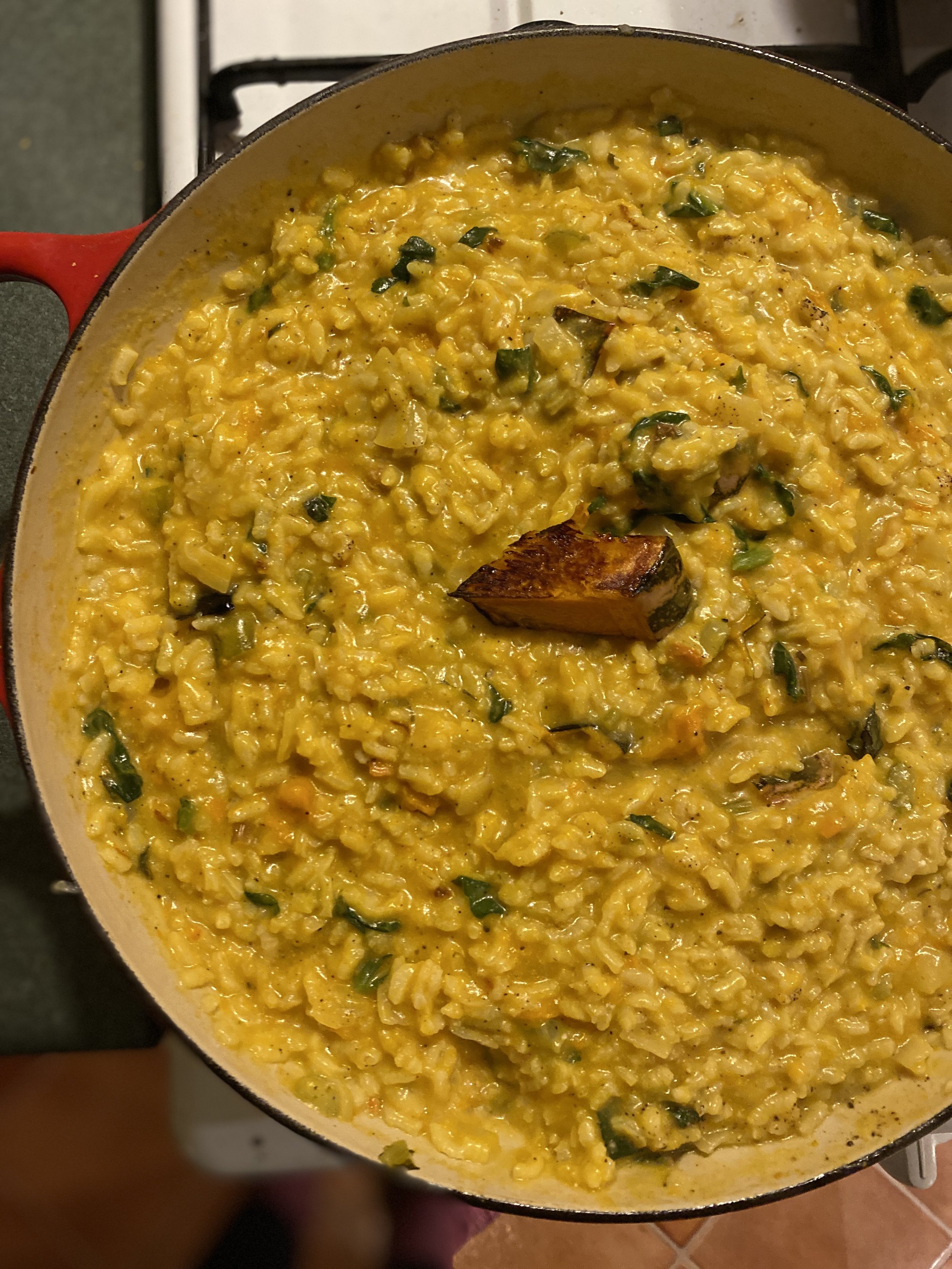
Creamy pumpkin risotto, pictured - absolutely scrumptious.

I made Deliciously Ella’s spiced cauliflower and cashew pilaf traybake, which was utterly divine. It’s a recipe from her new book, which I haven’t got yet - I got this recipe emailed as part of her newsletter (but I found a link online for it for you). I’ll definitely be getting the book, as hers are some of the ones I cook from the most often (and if you know me, and how many cookbooks I have, that’s saying something!).

Fennel, walnut and sun-dried tomato pappardelle from Special Guest by Annabel Crabb and Wendy Sharpe, a book on whose brilliance and delicious recipes I have waxed lyrical several times before. This is my favourite recipe from that book and one I love to make when fennel is cheap and plentiful.

Yellow split pea dhal with loads of greens from the garden and chilli - I wanted to use up a huge bag of yellow split peas that I bought during the national lockdown of 2020 when red lentils were nowhere to be seen. This cook-up helped me stock the freezer and the dhal was so nourishing and warming.

Speaking of a cook-up, I made Jamie Oliver’s pasta e ceci soup and a loaf of bread for my sister and her family for when they brought the new baby home from the hospital. I’m planning on making a vat of that soup for us too, as the sample I tasted for seasoning was very delicious indeed!

Vegan sausage rolls to watch the Grand Final with….which we ended up not watching much of at all! Sob!

We cheered ourselves up with nachos for dinner, which were heavenly as always. I used wombok cabbage instead of lettuce for a winter variation and we didn’t have any avocado in, but oddly that seemed not to matter - in fact, Tom told me he preferred it without.

I’ve also discovered Biscoff spread which is somehow vegan (how?!) and has proved to be very dangerous indeed. I made a version of peanut butter cups with it (with Biscoff instead of peanut butter, obviously) all of which disappeared far too quickly. I also made a vegan chocolate cake for a celebration and put dollops of the spread in the middle of the batter before baking. It was unbelievably good.

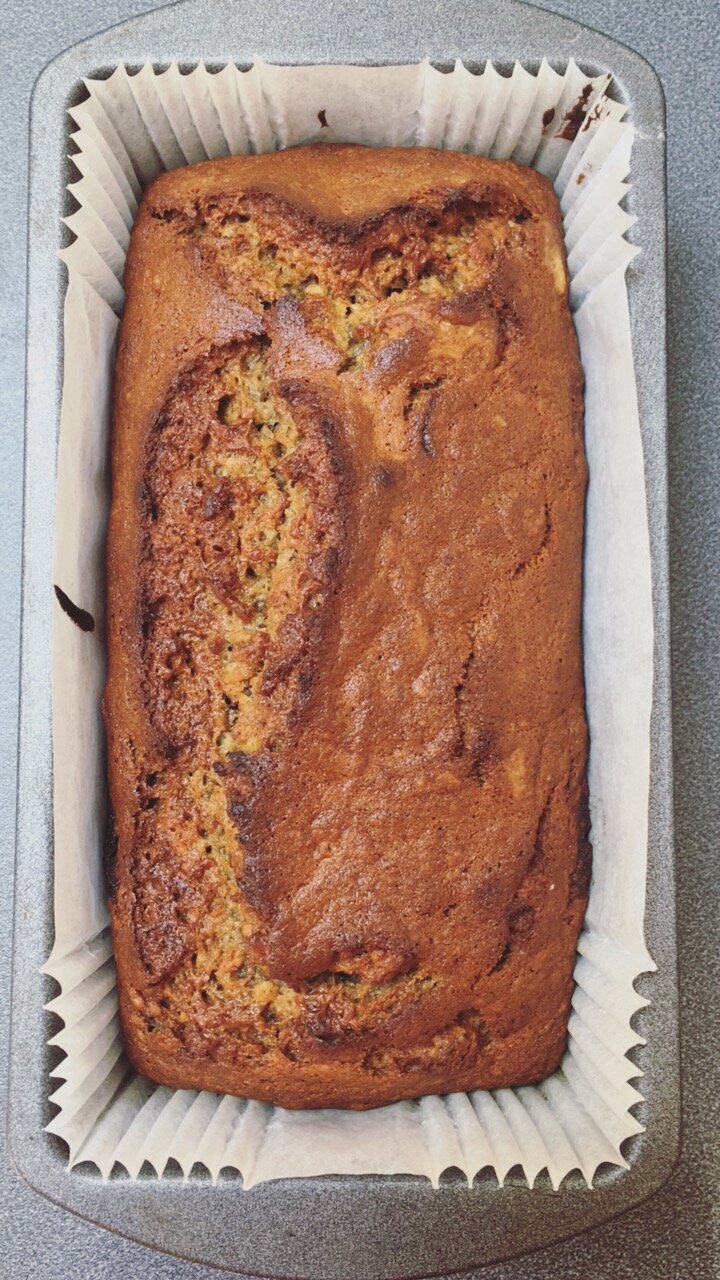
Vegan banana bread also made. It’s compulsory when there are spotty bananas in the fruit bowl, am I right?

Watching

We finished the whole series of Parks and Recreation for perhaps the second time this year. One of my favourites!

We finally watched the film Citizen Kane which in all honesty I had never seen - and I was astonished at how many Simpsons jokes and homages I suddenly understood, after all this time. Ahead of its time - absolutely. The greatest film ever made, as so many have claimed it to be? Not in my opinion. But worth watching all the same.

We also finished The Thick of It series which made me almost yearn for my former British workplaces in a very, very weird way. Though I don’t think I’ll ever yearn for the one that had its office inside Paddington station.

We’ve just started watching The Newsreader, which is on ABC iview here and I believe is also on BBC iPlayer in the UK. It’s just brilliant. If you liked Morning Wars (which is what it’s called here, because we have a show called The Morning Show, which is what it’s called everywhere else), you will love this - I think it’s even better, in many respects. We’re two episodes in and I’m already hooked. The series is set in Australia in 1986 and there’s something quite surreal about watching something set in a place and time when you were a young child and realising how much of it you remember.
Picking

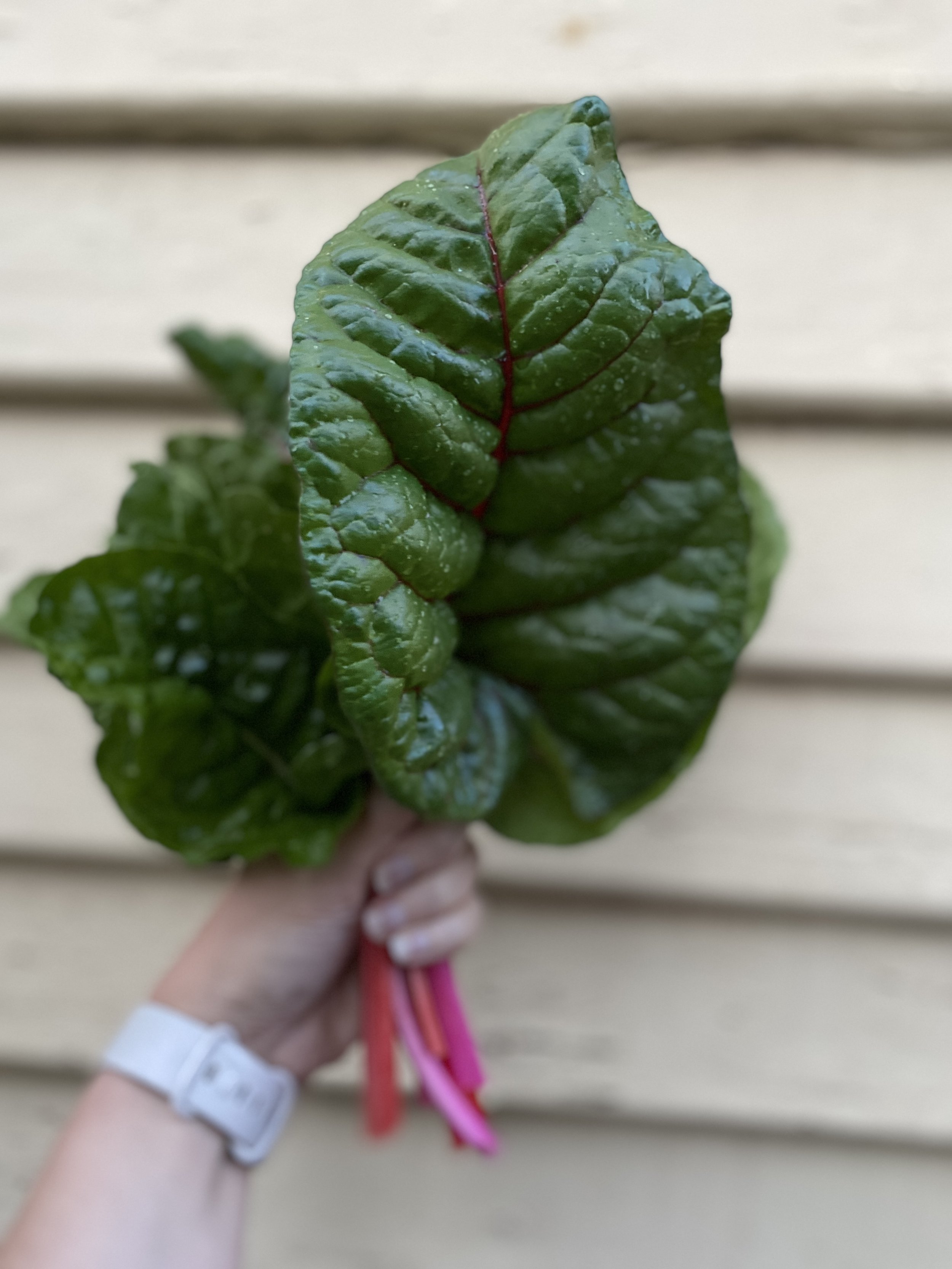
Rainbow chard, silverbeet, cavolo nero. I also picked a big bunch of celery for my dad. In the garden itself I planted some broad beans and marked out a spot for my potatoes. Soon it will be time for spring planting!

Moving

I’ve felt like doing a lot of yoga this week - I really love Jessica Richburg’s channel on Youtube. She has a lot of lovely gentle practices. I don’t know if it’s a coincidence but ending my work day with some gentle yin yoga has also coincided with me sleeping better than usual. So I’ll be curious to keep that practice up!

Noticing
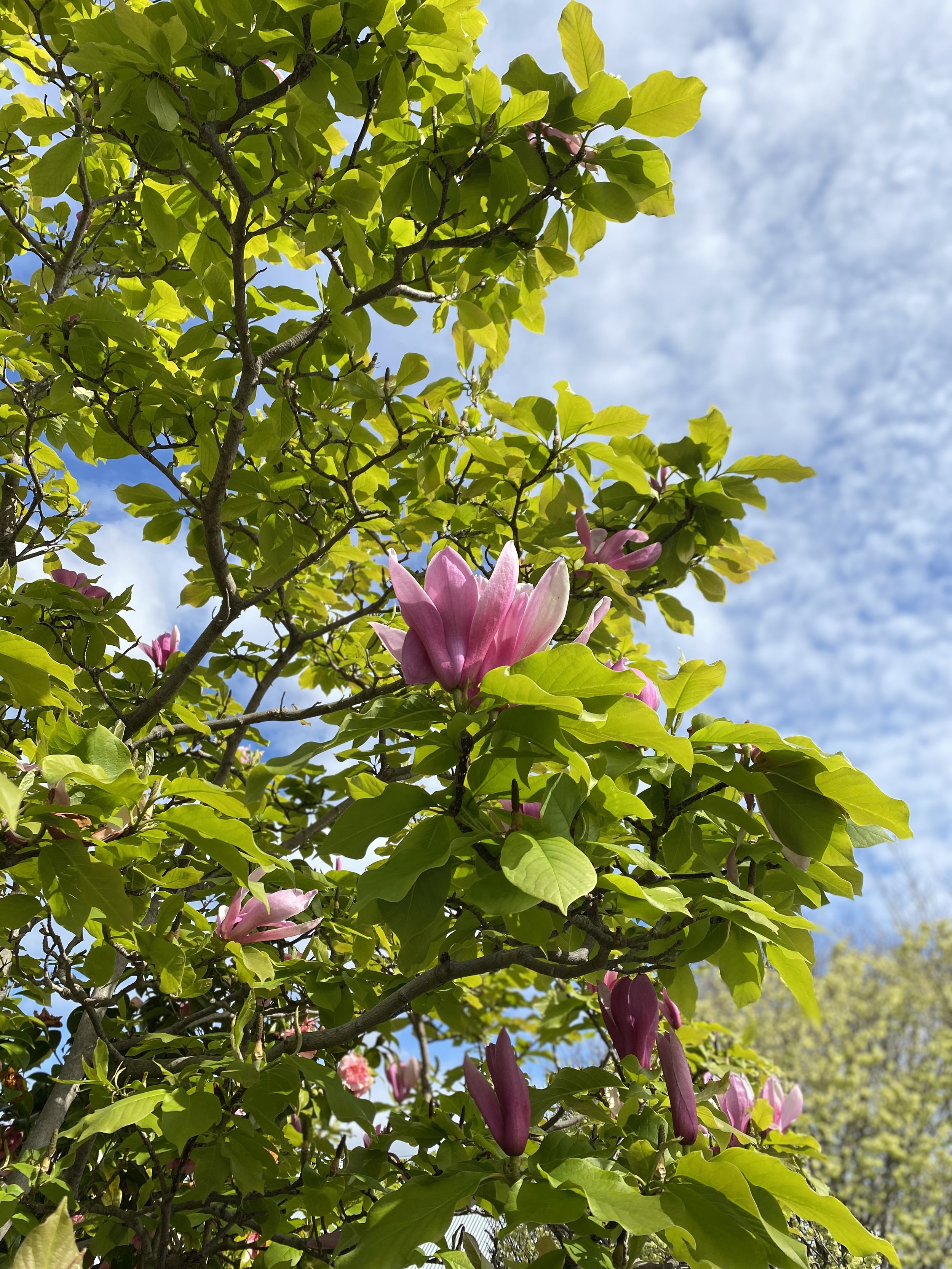
Magnolias in full bloom, everywhere. How the air when you go outside at night is fragrant with jasmine and wattle flowers. How alive everything suddenly looks and feels after a long winter. And yet, the minute you change your bedsheets back to the spring and summer ones, the nights suddenly dip back to a freezing two degrees!

Quote of the week

It had to be Hilary, of course. There were so many I could have picked but this one felt apt:

“The things you think are the disasters in your life are not the disasters really. Almost anything can be turned around: out of every ditch, a path, if you can only see it.” - Hilary Mantel

If you’d like to share your thoughts on this post, or anything else, with me, please do! Wishing you all a happy and safe weekend, filled with enjoyable things xx

five breads that are easy to make at home

Well, this isn’t quite the content I thought I’d be writing in March 2020. What strange, frightening times we’re living in at the moment.

I live in a small city where not a great deal changes, but nowhere, it seems, is immune to what is going on. Yesterday, I walked (I didn’t dare take the car) to a supermarket a few kilometres away. I was horrified by what I saw. Signs everywhere announcing restrictions on purchases, and that abuse to staff wouldn’t be tolerated (as it shouldn’t be, but it’s sad that people’s conduct necessitates such reminders). Crowds. Trolleys. People grabbing what they could, from bare shelves.

Most confronting of all was seeing an elderly couple, perhaps in their late seventies, with masks on, pushing their trolley together, looking terrified. It was heartbreaking. I got what I’d come for (the upside to taking soy milk in your coffee, it’s always there!) and then had a bit of a cry on the walk home. Fortunately, it had started to rain by then.

Australia is one of the most self-sufficient countries in the world when it comes to food. Nothing was going to completely run out any time soon - it’s because of the panic-buying that stocks have dwindled and the shelves are empty. And the elderly, the disabled, the most vulnerable in our communities - they are the ones suffering. It’s a disgrace.

Yet, at the same time, I understand why people have panicked. If you know something is in short supply, or going to be, it’s natural to want to get as much as you can, so your needs will be taken care of. It’s natural, when everything is so uncertain, to want to control what you can, to feel safe and prepared.

Every day I have to remind myself that the tightness in my chest is anxiety and panic, not the onset of the virus. I work from home 90% of the time anyway, but I am finding myself restless, unable to focus for long periods of time.

In times of stress, I turn to food, in a good way. Reading about it is soothing. Cookbooks have replaced dystopian fiction as my bedtime reading - the latter feels all too real at the moment.

And I love to cook. I can make bread, I can preserve a glut of fresh fruit and vegetables, I can make nourishing and delicious meals from the bare minimum of ingredients. Right now, it feels like those skills are very, very valuable. I am grateful to have them.

I’m also grateful for my vegetable garden which, in early autumn for us here, is still giving us silverbeet, cavolo nero and zucchini like nobody’s business. There’s even a few tomatoes left on the vine. And Tom’s work colleague gave us extra from her garden - rhubarb, carrots, apples, chillies - in exchange for some of my famous apricot and date chutney (recipe coming soon!). So we have plenty. The key is to use it well.

In a bid to be useful, I thought I’d share some cooking from the pantry ideas - as well as any interesting and helpful resources that I stumble upon.

Let’s start with bread.

I’m not surprised that one of the things that’s hardest to find in the supermarkets at the moment is flour. Because if you have flour, you can make countless things, including bread. And making bread is, in my opinion, one of the most useful skills you can ever learn.

And it doesn’t have to be complicated. I love to cook but I absolutely hate getting my hands dirty, getting dough in my fingernails or in my wedding rings, that kind of thing. Therefore, easy breads are the order of the day around here. Preferably no kneading!

These five are my absolute favourite breads to make at home. And perhaps apart from number 4, the flours are interchangeable. Use what you have! It will be slightly different of course but it will still be edible and that’s what matters!

1) Leftover porridge bread

philippa-moore-porridge-bread

I found myself with half a saucepan of porridge leftover from our breakfast last week, when things were still relatively normal. If it were just a spoonful or two, I’d just put it in our compost but it looked like enough for another serve, at least. I abhor waste but cold porridge was not appealing. I seemed to remember reading a recipe for bread you could make with leftover porridge, so I googled it and there it was! The brainchild of Claire Thomson, this bread is absolutely magnificent. Tom and I devoured it. Perfect with butter and jam, or just plain. It’s even nicer if your porridge was made with a hint of cinnamon in it, as ours was!

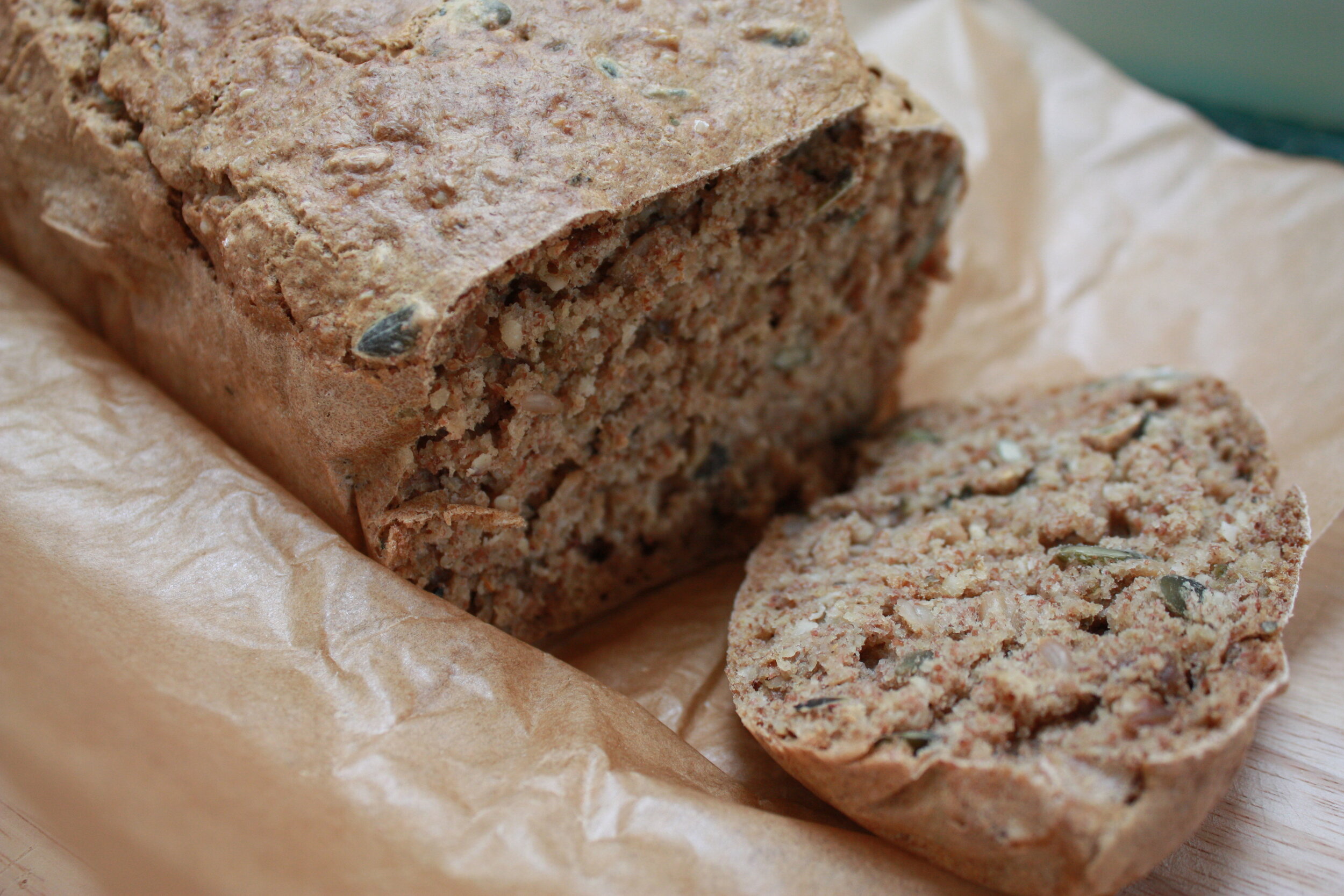
2) Seedy soda bread

philippa-moore-seedy-soda-bread

I have been making this bread for years. It’s one of the easiest things in the world to make - I’ve even made it when recovering from the flu. No yeast, the lovely tang of bicarb soda and the goodness of seeds. You can add raisins or sultanas too if you like, but as my husband is averse to dried fruit, I go for all seeds. It’s amazing with ricotta and jam, or just plain.

3) Dutch oven bread

philippa-moore-dutch-oven-bread

Everyone’s heard of this one, surely? There are many recipes from it, including one from the New York Times, but the one I’ve linked to is the one I’ve used the most. Lots of useful tips if you’re a first-timer. This is a bread I make all the time. Again, no kneading involved but just a longer prove so you’ll have to be a bit organised with this one and start it the night before. You can also add some sourdough starter to it if you have some. It tastes like you’ve put way more effort into it than you actually have!

4) Easy gluten-free bread

philippa-moore-gluten-free-bread-avocado-chilli

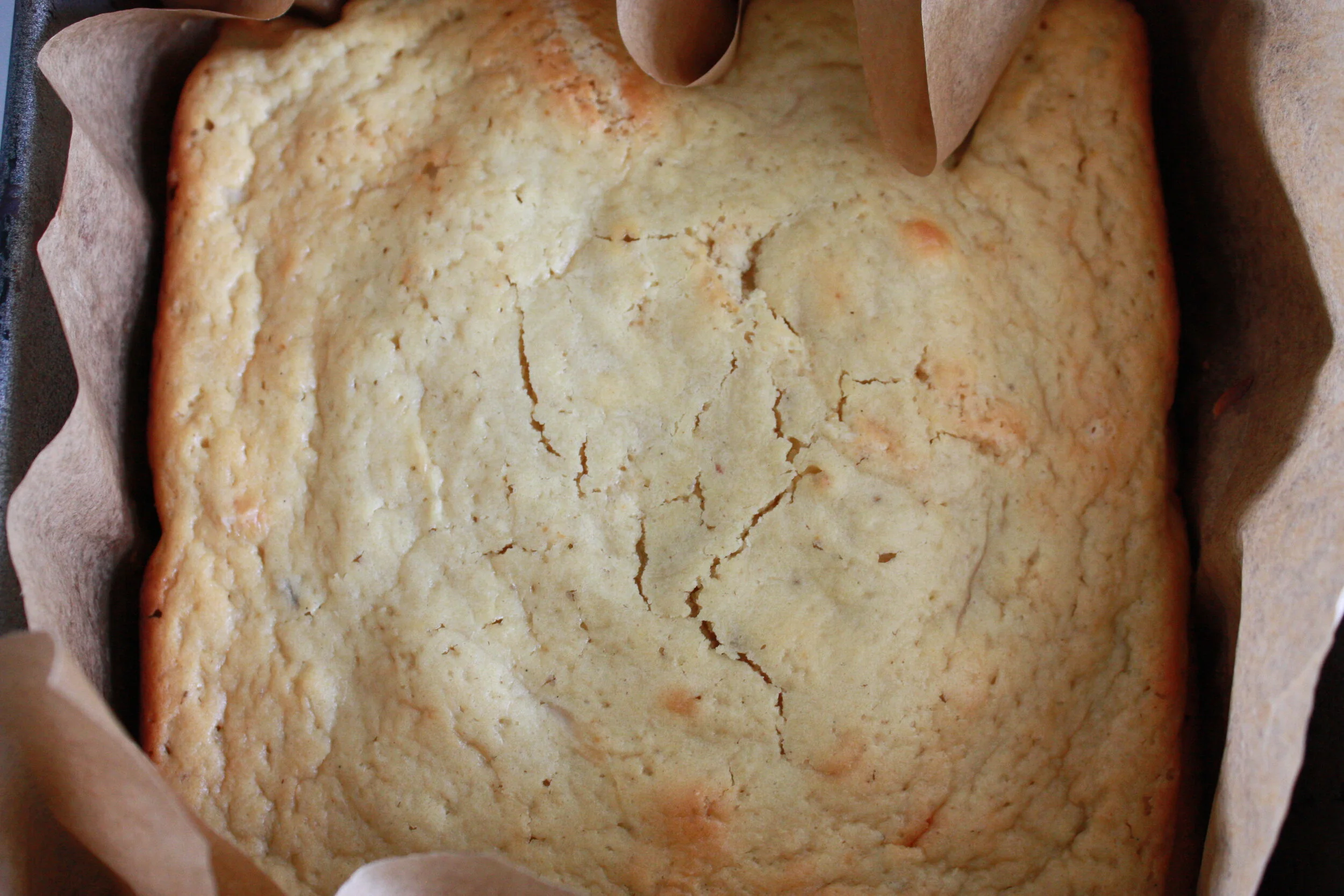
I don’t make this as often as I used to, as I find gluten-free flour more expensive here in Australia than it was in the UK (or maybe it’s because I still see the £ sign instead of $?) but it’s still a lovely easy loaf to make when you want a GF option. It’s more like making a cake than a loaf of bread, really. And if you have a breadmaker, like I do, there’s practically no labour involved at all!

I love it a day old, toasted, smothered with avocado and chilli, like the picture!

5) Banana bread

philippa-moore-banana-bread

Counts as a bread, surely? If you’ve got lots of bananas to use up at home, look no further. Super easy and absolutely delicious. We all need a sweet treat right now, I think.

I hope you enjoy these and please let me know if you try any of them!

Stay well and hopeful my friends xx

gluten-free bread

gluten-free-bread

You can make this with a breadmaker or by hand - I have done both. As usual, the breadmaker is by far the less labour intensive, but don’t let that put you off! It’s my go-to gluten-free loaf.

Gluten free white bread
Makes 1 medium loaf

310g milk (I use soy)
1 tsp vinegar or lemon juice
6 tbsp oil (I use rapeseed, coconut or olive oil)
2 eggs
450g gluten free white bread flour (Dove's Farm was the best one I used to use in the UK)
1 tsp salt
2 tbsp sugar
2 tsp yeast

Place a large jug or bowl on your kitchen scales and then weigh the milk into it.  Then beat in the vinegar/lemon juice, oil and eggs.  Pour this into the pan of your breadmaker.

Place the flour, salt and sugar into the pan of your breadmaker.  Stir slightly with a spoon.  Sprinkle the yeast on top.  Start the machine on the gluten-free program if it has one, or on the normal bread programme.  Check it after a few minutes and scrape down the sides of the pan if necessary.  Then let the machine continue.....and in a few hours your home will smell divine and you will have a loaf of gluten-free bread!

To make by hand, mix 325ml warm milk and the same quantities of vinegar and eggs in a large bowl.  Combine the flour, salt, sugar and yeast in a separate bowl, then add it to the wet ingredients and mix to form a sticky dough.  Continue mixing while you add the oil.  Place the dough in a well oiled 1kg/2lb bread tin, cover and leave to rise for 1 hour.  Bake in a 220 C oven for 40-45 minutes.

easy home-made bread

bread.jpg

Easy home-made bread
Based on a recipe in You're All Invited by Margot Henderson

Makes 2 loaves of bread

750ml warm water
2 packets dried yeast or 20g fresh yeast
1kg strong white bread flour (see note)
250g wholemeal flour (see note)
25g sea salt (I use Maldon)


Note: you need 1.25kg of flour all up for this recipe and the quantities can be 50:50 if you want a more wholemeal loaf, or stick to the original recipe if you want a lighter loaf but still with the nuttiness and goodness of wholemeal.  The one in the picture is about 40 per cent white flour, 60 per cent wholemeal (because I was almost out of white!).  I use strong wholemeal flour rather than plain which is more suitable for making a loaf that is predominantly wholemeal.  If you're sticking to the original recipe you can use plain wholemeal flour.

Put 100ml of the warm water in a small bowl or jug and add the yeast, stir gently to combine and set aside in a warm place to rest for at least 10 minutes.  It will go frothy and bubbly.

Combine the flours and salt in a large bowl and make a well in the middle.  Pour in the yeast mixture and then rest of the warm water.  Mix together with your hands - I recommend removing any rings!  It helps to use the largest bowl you can, otherwise you might find it goes everywhere!  It shouldn't need more water, be patient and try to work it all together.  When it comes together it should be pliable and slightly sticky.

Turn the dough out on to a board that you've floured or rubbed with some olive oil and knead for approximately 10 minutes.  Place the dough in a bowl, that you've also floured or oiled, cover with a tea-towel and leave to rise in a warm place for an hour or until the dough has doubled in size.

Take the dough out of the bowl and knead again for about 10 minutes.  Divide it in half. Either shape into two loaves, or shape one dough into a loaf and put one dough into a bowl, cover with cling-film and put in the fridge for baking another day (I leave it for three days and it's fine - bring the dough back to room temperature before kneading, shaping and baking though).

Place the loaf/loaves on a lightly oiled baking tray and place again in a warm place until they have almost doubled in size again.

Preheat the oven to 180 C/160 C fan oven/ 350 F/gas 4 and bake the bread for 40 minutes. Tap the bottom of the bread after this time: it should sound hollow.  If it still sounds dense give it a bit longer.  Leave to cool on a rack.  Don't be tempted to cut a slice straight away, it will fall apart right in your hands.  Let it cool for a good half an hour before tucking in.

seedy soda bread

philippa-moore-seedy-soda-bread

Feeling seedy? 

If so, I recommend this amazing seeded spelt soda bread. So easy to make, I did it one-handed high on cold and flu drugs!

Seedy soda bread

Based on a recipe in Jordan and Jessica Bourke’s The Guilt-Free Gourmet

475g wholemeal spelt flour OR wholemeal plain flour (or a mixture of both)
1 tsp bicarbonate of soda
1 tsp baking powder
1 tsp sea salt
200g mixed seeds (I use sunflower, pumpkin and linseed)
550ml tepid water

Preheat the oven to 180 C (fan-forced).

Mix all dry ingredients together, then add the water. You can add some maple syrup or molasses if want it to be a sweet bread but I don’t bother! Mix everything until well combined and there are no lumps of flour.

Pour the mixture into a greased and lined 20cm loaf tin and pop into the oven for around 50 minutes (I would start checking it after 45). If it’s brown and a skewer comes out clean, then it’s done!

Allow to cool slightly in the tin and then remove on to a rack to cool. You can slice it when it’s warm, or it lasts for several days and makes excellent toast. If you’ve used sunflower seeds, they will go green (!) but that’s part of the fun and the bread is perfectly safe to eat.